

|
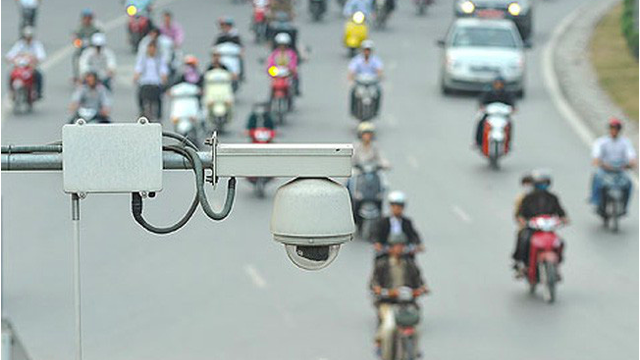
In the context of rapidly advancing security technology, camera surveillance systems are increasingly being widely used in many fields such as transportation, manufacturing plants, airports, shopping centers, urban areas, seaports, and many other critical locations. Among the various types of surveillance cameras available today, CCTV PTZ cameras (Pan – Tilt – Zoom) are considered one of the most effective monitoring solutions thanks to their flexible ability to pan, tilt, and zoom. For PTZ cameras to operate stably with the capability of continuous rotation without limitations on the number of turns, an electrical slip ring plays an extremely important role in the structure of the system. The article below will help you better understand the role, working principle, and applications of slip rings in CCTV PTZ systems |
 |
 |
In a PTZ camera, the camera module can rotate continuously 360° horizontally and tilt vertically. Without a slip ring, the cables would twist after several rotations, leading to broken wires, signal loss, and equipment damage. A slip ring completely solves this problem. Slip rings ensure that electrical power is continuously transmitted from the stationary part to the rotating part of the camera without interruption. Modern surveillance cameras often transmit high-resolution video signals. Therefore, the slip ring must ensure that the video signal is transmitted without attenuation or interference from the rotating camera to the recording system. This is an extremely important factor in security systems, as image quality directly affects identification and monitoring capability. |
|
PTZ cameras need to receive control signals from the monitoring center to perform functions such as: pan left/right, tilt up/down, zoom, focus, and preset positioning. The slip ring allows these control signals to be transmitted reliably between the stationary part and the rotating part of the camera. Modern PTZ cameras commonly use Ethernet or IP protocols for data transmission. Slip rings used in these systems can support the transmission of Ethernet signals, network signals, sensor signals, and control data, ensuring stable operation of the system over a long period of time. |
|
|
Slip rings are an essential component in CCTV PTZ camera systems, enabling continuous and stable transmission of power and signals between the stationary and rotating parts of the camera. With the use of slip rings, PTZ cameras can perform continuous 360° rotation without encountering problems such as cable twisting or signal interruption. This significantly improves monitoring efficiency and ensures that the security system operates reliably over long periods of time. In the future, with the rapid development of intelligent surveillance systems and high-resolution cameras, slip ring technology will continue to evolve to meet the increasingly demanding requirements of the security industry.
|
|
